Do the technical assumptions hold up?
Independent plausibility check and technical second opinion before an investment, a purchase or a release.

I provide it, for electric vehicles and stationary battery storage. Independent, physics-based, and verifiable.
 Dr. Gerald Sammer
Independent Technical Expert for Electric Vehicles & Battery Energy Storage Systems
Dr. Gerald Sammer
Independent Technical Expert for Electric Vehicles & Battery Energy Storage Systems
I am contacted in three situations. The service is the same in all of them: an independent technical assessment when the standard answer is not enough.
Independent plausibility check and technical second opinion before an investment, a purchase or a release.
Systematic root-cause analysis from operating data, engineering and physics-based simulation.
Traceable technical reasoning for private expert opinions, negotiations and proceedings.
Software delivers the analysis. I examine the assumptions it rests on.
In a dispute, the manufacturer demonstrates that it was driven incorrectly, the operator that the battery cells are weak. Before an investment, the manufacturer provides the ageing curve that justifies its own system. Both parties compute correctly. What decides is the assumptions behind the calculation.
I make them explicit and test them against a physics-based model, independently of everyone involved and in a form that holds up in court.

Concrete questions from practice.
How a measured loss becomes a reasoned finding.
22 electric light-duty trucks in a delivery fleet in northern Germany. Since the second winter, drivers have reported sharply declining range. The operator suspects a battery defect, the leasing company holds the usage responsible.
Normal ageing or a defect?
OBD data and charging logs reveal: the fleet charges predominantly via DC fast charger. Average 1.2 fast charges per day, often at SOC <15%.
The aging model is parameterised from cell chemistry and vehicle type, not from this fleet. All it receives from the fleet are the boundary conditions, namely the usage profile, the charging behaviour and climate data from Hamburg, and from these it predicts the capacity these vehicles ought to have under this duty. Only then do I reconstruct the actual capacity from the charging logs, energy charged against the SoC window, independent of the battery management system's own estimate.
Simulation enables isolated analysis of each individual factor.
The fleet operator receives a robust report with reproducible simulation. The leasing company accepts the result. An expensive dispute is avoided.
This is how I work. Do you have a similar case?
Request an initial consultationA state-of-health value describes a single point in time. From it I assess what a vehicle or a storage system delivers in real-world use across its service life.
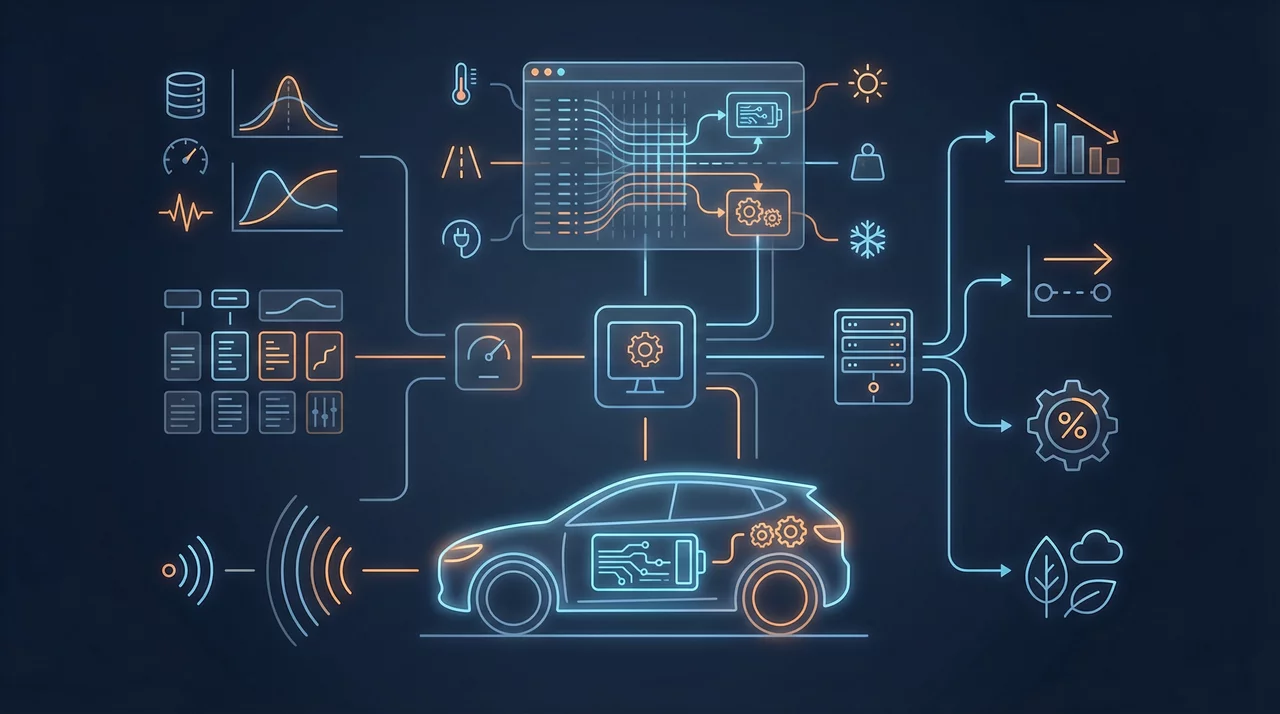
Range cases are decided on whether a deviation can be explained by the environment or goes back to the condition of the battery. Move temperature and battery age independently of each other. That same separation is what I deliver in every assessment.
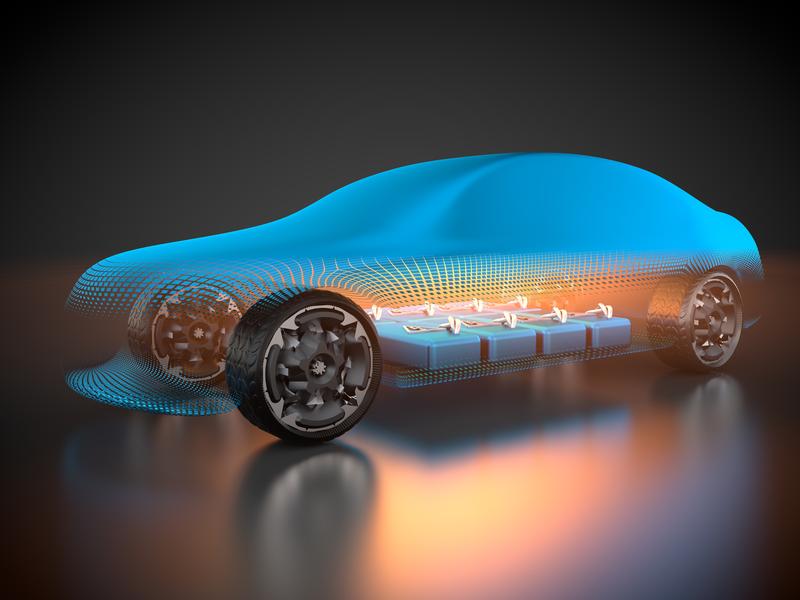
I founded simotive.ai to resolve technically contested cases independently. My work begins where measurement and diagnostics no longer give a clear answer.
Dr. Gerald Sammer
Founder and Managing Director, simotive.ai
Are you facing a decision with real exposure, an unexplained failure, or a technical dispute? In an initial conversation we establish whether an independent technical analysis helps.
gerald.sammer@simotive.ai